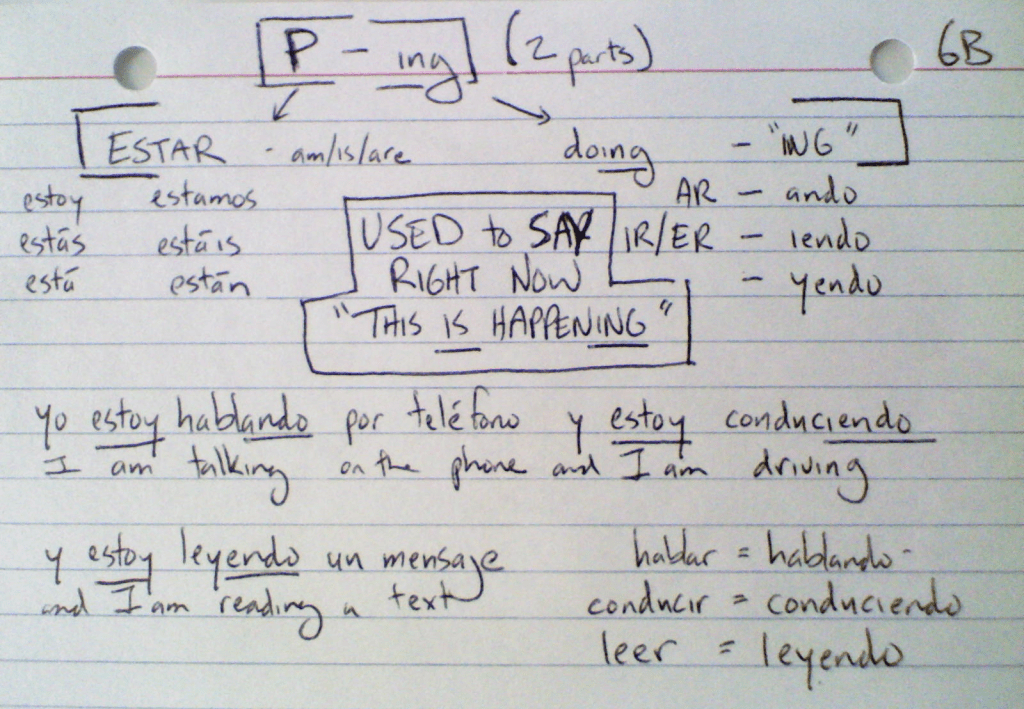

You need estar to say someone “is” doing something. That is always the first part.
Here, hacer is the second part, haciendo. The “lo” that got attached means “it.”
No estoy haciéndolo. I not am doing it.


Learn Spanish, have fun, get an A and keep it
You need estar to say someone “is” doing something. That is always the first part.
Here, hacer is the second part, haciendo. The “lo” that got attached means “it.”
No estoy haciéndolo. I not am doing it.


The infinitive is IR. The yo form is voy. Taking away the “o” doesn’t work. So this verb is irregular. You can still get the opposite ending. No te vayas. Don’t yourself go.

The infinitive is preocupar. The yo form, preocupo. The opposite ending for ustedes, en. No se preocupen. Don’t yourselves worry.

The infinitive is romper. The yo form, rompo. The opposite ending for tú, as. No rompas. Don’t break.

The infinitive is hablar. The yo form, hablo. The opposite ending for tú, es. No hables. Don’t talk.
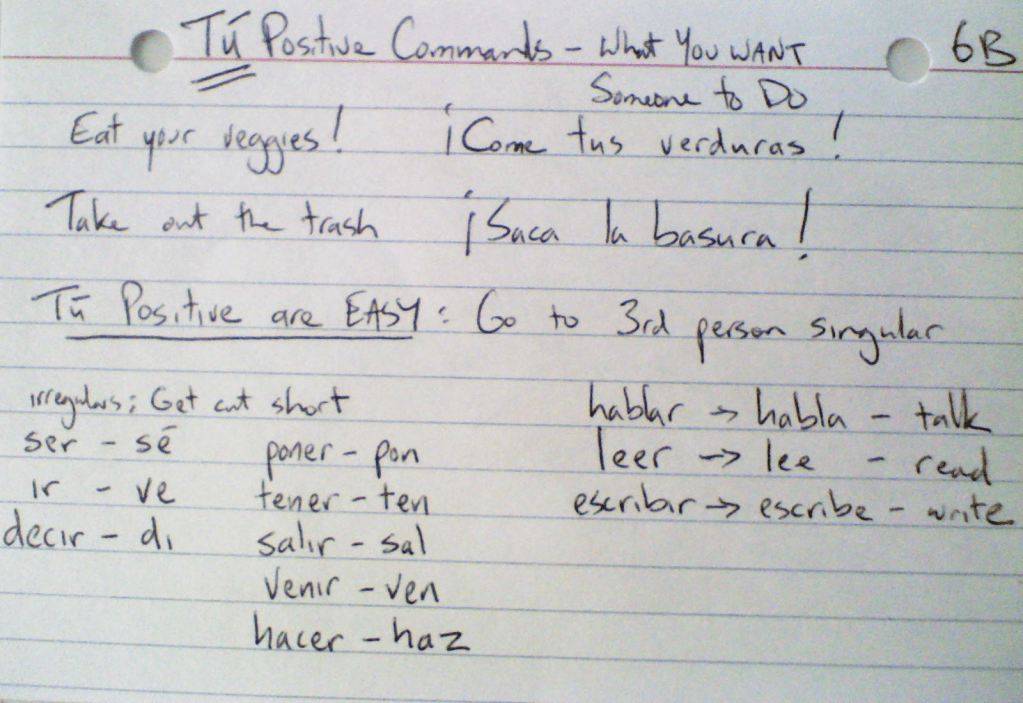

HAZ comes from hacer, meaning “do.” The ME added to the end of it is the “me.” “Do me a favor” . . . Hazme un favor.

DI comes from decir, meaning “to say.” The ME added to the end of it is the “me.” “Tell me” . . . “Dime!”
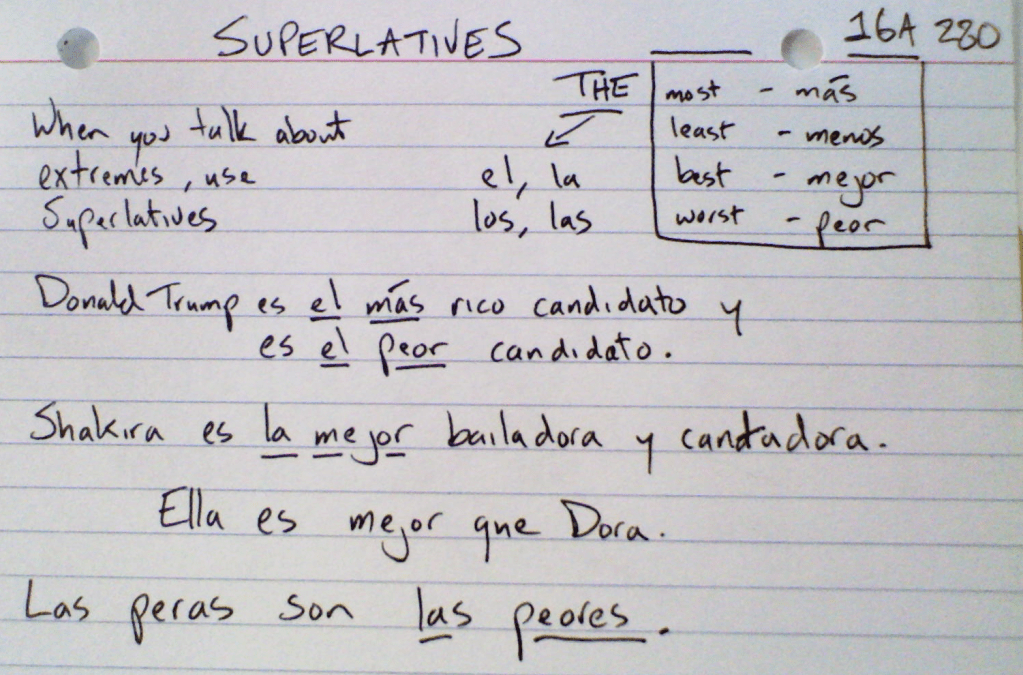
You have to use THE with superlatives.